

Webinar: Building Reliable Low-Power Cellular IoT Products
Produced by LMT IoT
Speakers:
Annija Frīdenberga, Head of Operations at LMT IoT
Arturs Lalovs, Cellular IoT Business Development at LMT IoT
What is this webinar about?
This webinar is about low-power cellular IoT and what it takes to build connected products that work reliably in real-life conditions. The discussion covers why cellular IoT devices are often more complex than they look at first, where the main technical challenges appear, and how companies can overcome them when building connected hardware products.
The session also introduces LMT IoT’s experience with cellular IoT, IoT Shortcut, satellite connectivity, Edge AI, and the mentorship program developed together with Infineon.
Who are the speakers in this webinar?
The webinar is moderated by Annija Frīdenberga, Head of Operations at LMT IoT.
The guest speaker is Arturs Lalovs, who works in cellular IoT business development at LMT IoT. Arturs has several years of experience in telecommunications and low-power cellular IoT hardware. His background combines engineering and business education, which helps him connect technical possibilities with real business needs.
How did LMT become involved in cellular IoT solutions?
LMT is a leading Latvian mobile operator. Its core business has traditionally been mobile connectivity, including SIM cards and other telecommunications services.
However, telecommunications businesses are often limited by geography. Where a company has cell towers, it has business opportunities. To grow beyond that limitation, LMT started investing in new business directions and developing solutions built on top of cellular networks.
That is how LMT IoT was created. Today, LMT IoT focuses on developing full-stack IoT solutions that are used not only in Latvia, but also internationally. Connectivity remains one of LMT IoT’s strongest advantages because it is deeply connected to the company’s core expertise.
Why is it important to talk about low-power cellular IoT now?
A few years ago, the expectations for low-power IoT were extremely high. Around 2018, some forecasts expected very rapid growth for low-power IoT devices. The vision was that connected devices would soon be everywhere.
In reality, adoption has been slower than expected. The reason is not that the technology does not exist. Cellular coverage is available, chipsets are available, and there are many valuable use cases. The challenge is that building reliable low-power cellular IoT products requires expertise across many different technical layers.
Companies often want to focus on their use case and business value, but instead they need to deal with hardware, firmware, connectivity, antennas, cloud systems, protocols, security, data management, and device management. That complexity slows down real-world implementation.
Why are connected IoT products more complex than they seem?
A simple sensor can look easy to build. For example, a temperature sensor can be assembled by a hobbyist using online components and tutorials. It may work well on a table and show the room temperature.
But when that same sensor needs to work as a connected product in a real environment, such as inside a refrigerated truck, the complexity changes completely. The device now needs to connect to a mobile network, communicate reliably, store and send data, operate with limited power, work with an antenna, and be managed remotely.
A reliable connected IoT product usually requires several areas of expertise: hardware engineering, firmware development, cloud architecture, backend development, frontend development, connectivity, security, and device management. If one layer is weak, the whole system becomes fragile.
What can skydiving teach us about IoT complexity?
Arturs compares IoT product development with skydiving. From the outside, skydiving may look simple: you get into a plane, take a parachute, jump, and land.
In reality, a safe jump depends on many interrelated layers: equipment preparation, procedures, weather conditions, body control, altitude awareness, traffic control, and more. If one layer fails, the whole system becomes unsafe.
The same is true for IoT products. A connected device may look simple from the outside, but reliability depends on many layers working together.
What did LMT IoT learn from developing a connected smoke detector?
In 2020, LMT IoT started developing a smoke alarm with cellular connectivity. The idea was to provide remote alerts and remote monitoring.
As connectivity experts, the team initially expected that the product could be launched in about one to one and a half years. In reality, it took around four years.
The challenge was not one specific technical issue. The complexity appeared in two main phases: prototyping and deployment.
In software, a prototype can often be created quickly with a design or a basic version of the product. In connected hardware, even a meaningful prototype requires several layers to be built first. Hardware, firmware, connectivity, cloud communication, and device management all need to work at least partly before the device can be properly tested.
The second challenge appears during deployment. Once devices are placed in real environments, new questions become important. How does the device behave in different buildings? What happens when the signal is weak or unstable? How does it perform in different countries and network configurations? How does battery life behave outside the lab?
These real-world conditions are difficult to fully predict in advance.
What would LMT IoT do differently if starting the smart smoke detector product today?
Today, LMT IoT would use modular solutions from the beginning.
When the smoke detector project started, such modular solutions were not available in the same way. The team had to build and integrate many layers themselves. That experience became an important learning process and helped LMT IoT understand the need for better technology enablers.
The key lesson was that companies should not have to develop deep cellular IoT expertise only to launch one product. They need tools and building blocks that allow them to focus on their business case instead of rebuilding the same technical layers again and again.
What is IoT Shortcut?
IoT Shortcut is a building block created by LMT IoT to reduce the complexity of cellular IoT product development.
It combines hardware, firmware, connectivity, device management, and supporting infrastructure into one solution. The goal is to help companies move faster from idea to working prototype and later to reliable deployment at scale.
IoT Shortcut was created after LMT IoT experienced firsthand how much time and effort it takes to build all the necessary layers from scratch.
Which parts of the IoT stack create the most complexity?
The biggest challenge is not always one specific layer. In cellular IoT, all layers are interrelated.
For one company, hardware may be the easy part. For another, software may be easier. Another team may be strong in firmware or connectivity. But once a device is deployed in the field, every layer matters equally.
A product cannot have excellent hardware but weak firmware or an unreliable cloud solution and still be expected to perform well at scale. For a cellular IoT device to be reliable, hardware, firmware, connectivity, cloud, security, and device management must work well together.
How does IoT Shortcut help companies prototype faster?
IoT Shortcut helps companies reach meaningful prototype validation faster.
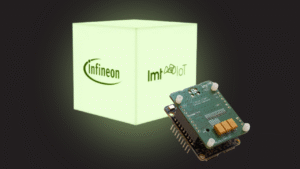
LMT IoT has also created an evaluation kit, which is an extended version of IoT Shortcut. It allows companies to connect physical sensors, attach batteries, and test a prototype in real-world conditions.
Depending on the complexity of the use case, this can help companies move from idea to field testing in days, weeks, or sometimes around a month. The main value is that companies can validate the concept earlier and avoid spending too much time and money before learning whether the product works in practice.
Is IoT Shortcut only for prototyping?
No. IoT Shortcut is not only a prototyping tool.
It is also built with scaling in mind. LMT IoT operates thousands of devices in the field and has practical experience with what happens after devices are deployed. That experience has influenced how IoT Shortcut is designed.
The solution helps companies start faster, but it also supports the path toward commercial deployment and reliable operation at scale.
What is one mistake companies should avoid when launching a product with cellular connectivity?
One important mistake is testing only in the lab for too long.
A lab prototype can work perfectly, but real environments are different. Signal strength is not the same everywhere. Buildings, user behavior, network conditions, and battery performance can all affect how the device behaves.
Companies should bring prototypes to real customers and real environments as soon as possible. Instead of spending years developing a perfect solution in isolation, they should test early, learn from real conditions, and then fine-tune the product.
How long does implementation usually take from testing to full deployment?
The timeline depends on the complexity of the solution and the resources available from the customer’s side.
A meaningful prototype can often be developed in up to one month. At this stage, the company can understand what kind of solution is needed, what sensors will be connected, and how the product might work.
After that, a commercial prototype phase may take around two to three months. This can include first casings, a custom form factor, and a custom carrier board.
The next stage is a full product version that can support manufacturing and scaling. Overall, the process can take from around half a year to a year, depending on the product complexity and the team’s readiness.
What should a team do if it has a strong use case but does not yet have a full hardware, firmware, cloud, and connectivity team?
A team with a strong use case but without a full technical team can be a good fit for IoT Shortcut and the LMT IoT mentorship program.
The most important starting point is the use case. The first step is to evaluate whether low-power cellular IoT is the right technology for the problem. This technology is not suitable for high-definition video streaming or large data transfers. It is most valuable when the product needs low power consumption, reliable connectivity, and the ability to send important data efficiently.
It is useful if a team already has some hardware, firmware, or electronics experience, but it is not always mandatory. If the use case is strong, LMT IoT can help evaluate the right technical path.
What practical steps should a company take before meeting LMT IoT?
The company should think clearly about the use case.
The most useful questions to prepare are: What problem should the device solve? Where will the device be used? What data does it need to collect? How often does it need to communicate? What power limitations exist? What environment will it operate in? Does the product need to work in areas with weak or no cellular coverage?
The first meeting is usually about understanding the need, gathering requirements, and defining practical next steps. Every company’s situation is different, so the process depends on the use case, the technical readiness level, and the intended product path.
What are the main emerging trends in IoT?
Three important trends in IoT are SGP.32, satellite connectivity through NTN, and Edge AI.
SGP.32 is related to remote SIM provisioning. In an ideal future scenario, companies would not need to physically replace SIM cards depending on region or operator. Instead, operator profiles could be managed remotely. This can make global IoT deployments more flexible, although the broader ecosystem still needs time to mature commercially.
Satellite connectivity, especially through NTN, is also important because cellular coverage does not reach every location. There are still remote fields, forests, maritime areas, and other places where cellular connectivity is unavailable or unreliable. Satellite connectivity can open use cases that cellular-only solutions cannot support.
Edge AI is another major direction. Devices are expected to do more than simply send raw readings. They need to process information locally, make decisions, detect events, and send only what matters.
Why is satellite connectivity important for IoT?
Satellite connectivity helps solve one of the biggest limitations of cellular IoT: coverage gaps.
Some devices need to operate far from regular cellular infrastructure. Examples include maritime telemetry, soil monitoring in remote fields, and defense-related devices placed in deep forests. If devices cannot connect, the whole use case can be at risk.
LMT IoT has been working with the European Space Agency and satellite providers to enable satellite communication for IoT devices. The goal is not to create a separate box, separate technology stack, or separate ecosystem. The goal is to use the same modem and the same SIM card for both mobile and satellite connectivity.
What are the challenges of satellite communication for low-power IoT?
Satellite communication comes with stricter data limitations. Throughput is lower, latency is higher, and every byte matters.
That means devices must be disciplined about what they send. Instead of sending large volumes of raw data to the cloud, devices need to process data locally and send only important information.
This is where Edge AI becomes especially useful. It allows the device to identify important events locally and reduce the amount of data that needs to be transmitted.
Why is Edge AI important for future IoT devices?
Edge AI allows IoT devices to become more intelligent and more efficient.
For example, an audio sensor generating raw data could produce gigabytes of data per day. That is not suitable for low-power IoT or satellite communication. With Edge AI, the device can process audio locally and send only a few bytes when something important is detected.
This changes the role of the device. Instead of being only a sensor that sends everything to the cloud, the device becomes capable of judgment. It can decide what matters and communicate only relevant events.
How do sensors, Edge AI, and connectivity work together?
A useful way to think about future IoT devices is this: sensors are the eyes and ears, Edge AI is the brain, and connectivity is the voice.
Without sensors, the device is blind and deaf. Without Edge AI, it has no judgment and may send too much raw information. Without connectivity, the device becomes isolated and cannot share important information.
Together, these three elements make it possible to build intelligent connected devices that can monitor, understand, and communicate what matters.
Why is it not enough to create an intelligent device once and ship it?
An intelligent connected device needs to be maintained throughout its lifetime.
Firmware may need updates. AI models may need retraining. Real-world data may need to be collected to improve the system. Connectivity and device management are also important for keeping the product reliable after deployment.
This means that the IoT ecosystem must support the device not only during development, but also during long-term operation.
What are real examples of companies using Edge AI and cellular IoT?
One example is RailSense, a startup from Ireland. The company uses audio sensors to monitor sounds from train axles, bearings, and engines. The goal is to detect anomalies.
This is not a simple rule-based problem. It is not enough to send an alert when sound reaches a certain decibel level. The system needs to analyze patterns, repeatability, and environmental conditions before reporting an event. Edge AI is well suited for this type of use case.
Another example is WellPet from Serbia, which is developing an intelligent dog collar. Many dog collars already offer GPS tracking, but WellPet is adding more sensors, including heart monitoring, accelerometers, temperature monitoring, microphones, GPS, and more.
If all this data were streamed directly to the cloud, the device would need far too much power. Instead, the collar processes data locally with Edge AI and sends only important events to the cloud.
How does the mentorship program help companies?
The mentorship program, launched by LMT IoT together with Infineon, helps companies apply cellular connectivity and Edge AI to real use cases.
The program provides building blocks, evaluation kits, and engineering support. The goal is to help companies avoid spending too much time on every technical layer and move more quickly toward a working prototype.
Several companies have already reached working prototype stage within two to three months by using this approach.
Is the mentorship program only for startups?
No. The mentorship program is not only for startups.
It is open to any company that sees potential value in combining Edge AI and cellular connectivity. If a company has a relevant use case, it can apply and receive support through evaluation kits and engineering hours.
What is the long-term vision for low-power cellular IoT?
The long-term vision is to make advanced IoT development much more accessible.
Today, building a satellite-connected, mobile-connected, AI-driven intelligent device requires significant expertise. In the future, the goal is to make the technology and its enablers simple enough that even small teams can build advanced connected devices quickly.
If that happens, it can open many new use cases and create new businesses.
What is the endgame for LMT IoT?
There is no final endgame. For LMT IoT, this is a continuous development path.
The company is moving deeper into the IoT technology stack and exploring new levels of vertical integration. This includes work related to chip manufacturing initiatives, satellite connectivity, and future connected device ecosystems.
The broader direction is to keep developing the technologies and building blocks that help companies create reliable connected products faster.