
#5 The best component is not always the perfect component

Why choosing components starts with understanding the job they need to do.
Welcome to edition #5 of Inside IoT!
Lower power consumption or tighter tolerances can make a component look like the better choice. Before selecting it, though, an engineer needs to understand what those differences would mean for the finished product.
We asked our colleagues at LMT IoT how they approach choosing the “best” component. Their answers bring the question back to what the product needs to achieve, and the trade-offs involved in getting there.
Happy reading!
Start with the job
For Valters Skrastiņš, Head of IoT Hardware at LMT IoT, optimal is a more useful starting point than best.
He compares component selection with choosing a car. A car designed for a drag race serves a different purpose from one built to take corners on a track.
“Which one is best? That depends on what you want to do with it,” he says.
The same reasoning applies to electronics. A component might stand out for its low power consumption or small size. Those strengths are useful, but they describe particular aspects of its performance. They do not tell you whether it is the most suitable part for your product.
Valters’s starting point is the outcome you are trying to achieve. Once that is clear, you can decide which characteristics matter most and compare components against them.
A component can lead on one measure and still be a poor fit for the design as a whole.

Read the specifications in context
Reinis Valters Kobitjevs, IoT Hardware Application Engineer at LMT IoT, points out that the strongest specifications in a datasheet depend on particular conditions.
A headline figure needs to be read alongside those conditions. Before using it to compare parts, you need to understand whether it applies to the way the component will operate in your design.
The same care is needed when comparing features.
“An integrated circuit (IC) with more functions may look like a better option. But Reinis notes that those functions can also overcomplicate the design and make the component harder to work with,” Reinis points out.
The useful question is which of those functions the product actually needs, and what is involved in using them. A longer feature list alone cannot answer that.
He also points to a familiar example: resistors. A highly precise resistor may be unnecessary when a cheaper, more common one can do the same job.
If the circuit already meets its requirements with that more common part, paying for tighter tolerance may add no useful benefit to the finished product.
The choice becomes clearer when you can explain what an improvement in the specification would actually improve in the application.
A component has to fit the product
For Rihards Balass, IoT Hardware Application Engineer at LMT IoT, perfectis a word to use cautiously. He explains how he sees it:
“There are no perfect components, only components that suit a particular need.”
A design can appear ideal on paper or in a simulation. In a physical product, its behaviour is influenced by many variables, like, temperature, humidity, vibration and other factors. Wireless systems also have to contend with radio interference and reflected signals.
Even when a technically better component exists, it may be too expensive or too large for the product. It may also offer precision the application does not need.
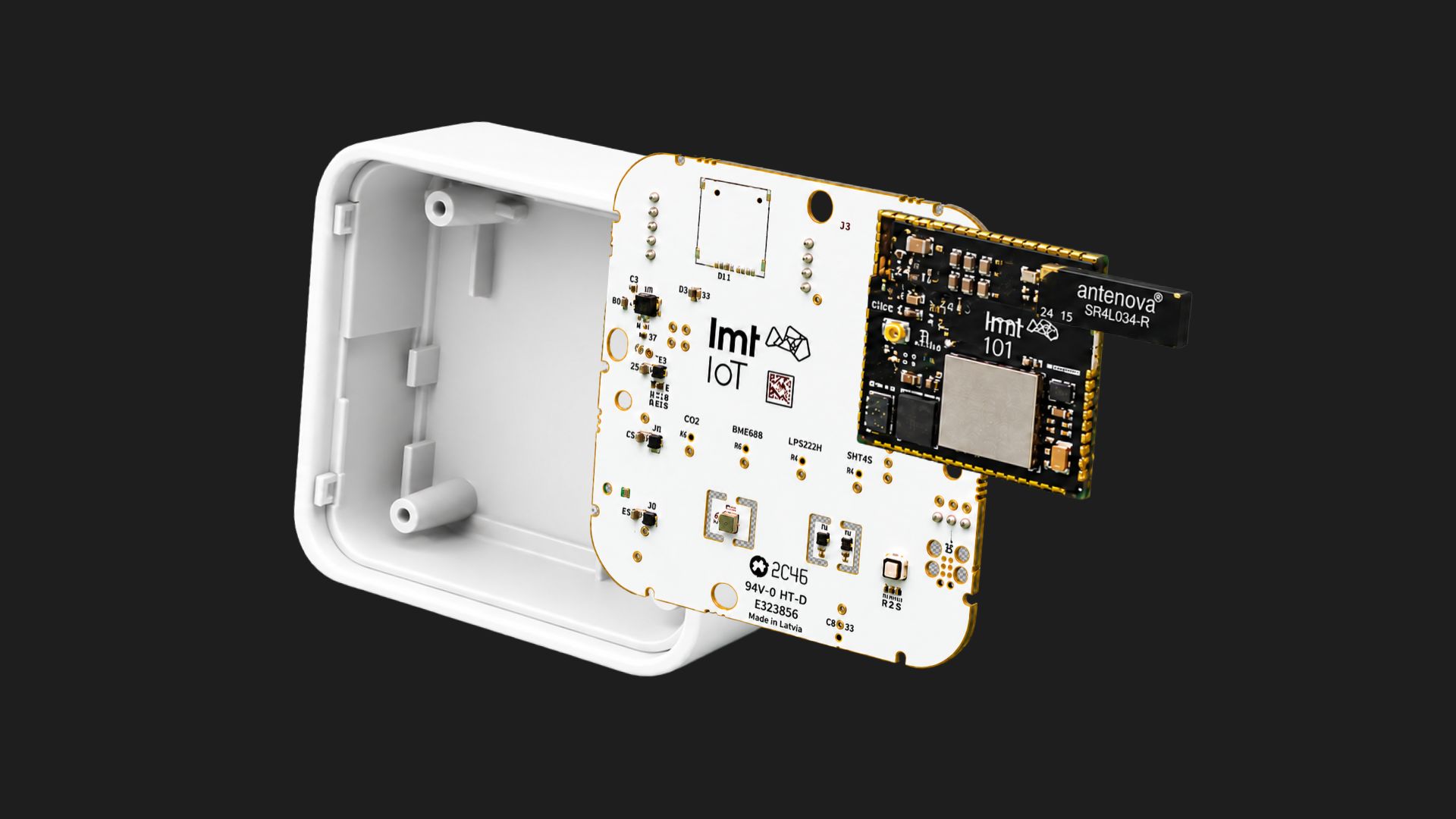
He illustrates this with a hypothetical sensor choice. The sensor with the strongest specifications might be available, but another is smaller and fits the space allocated on the board. If it meets the application’s requirements, that fit can make it the more suitable choice.
Perhaps that is the criteria which makes it the “perfect” component for that particular application?
Every choice needs to fit the whole picture
A component choice needs to make sense within the complete design. Its specifications matter alongside the cost and complexity it introduces, the space it occupies and the conditions in which it will operate.
Electronics involve many small decisions, and each one has to fit the whole picture. Choosing well means understanding what you gain, what you give up and why that balance serves the product.
The aim is to choose a component that fits the job, with trade-offs you understand.