




Skip to content

Apply to the Mentorship Program by LMT IoT and Infineon

Learn more

IoT module for connected devices

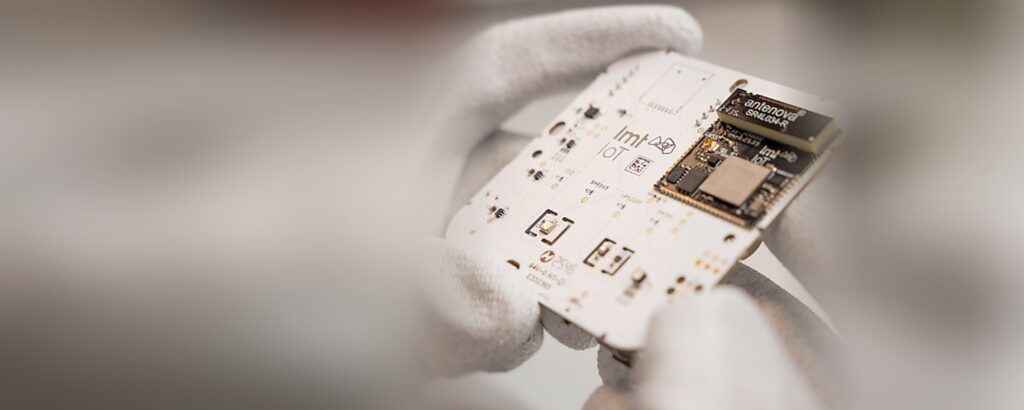
The LMT IoT module provides NB-IoT and LTE-M connectivity, GPS and a Zephyr-based SDK with ready cloud integration. Integrate it into your devices to send sensor data over mobile networks.
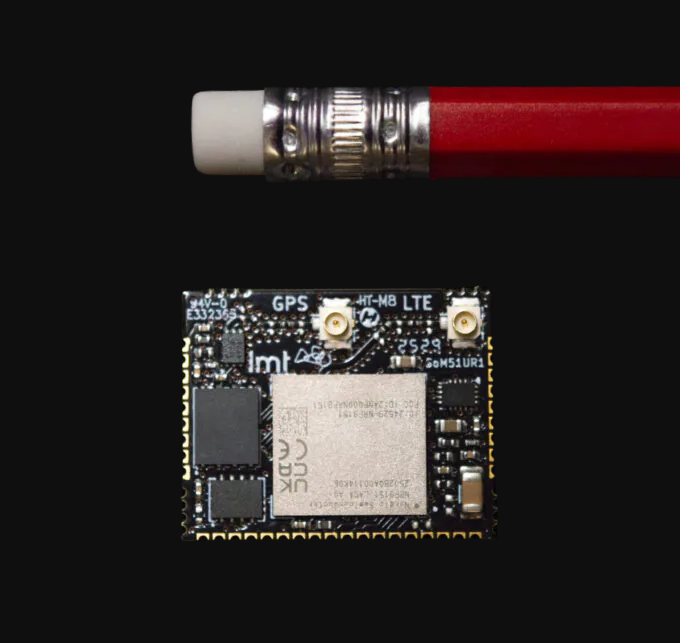
A small IMT circuit board labeled GPS and LTE, shown next to the eraser end of a red pencil for scale

IoT module capabilities

Hardware
Compact hardware

The 20 × 25 mm module combines processing, cellular connectivity, GPS and sensor interfaces on one board. Deep-sleep current below 8 µA at 3.6 V supports battery-powered designs, while built-in GPS adds location data for asset tracking.

Wireless connection icon
Cellular connectivity

The embedded SIM (MFF2) gives your devices global connectivity across supported LTE-M and NB-IoT networks, so one hardware version can be deployed in multiple markets. The SIM switch also supports an external SIM for full flexibility in choosing a provider.

Firmware icon
Firmware and SDK

Build your application directly on the module with the Zephyr-based SDK and ready LMT cloud integration. The module then acts as your device’s main MCU. For existing designs, it ships with gateway firmware, so it can run as a plug-and-play connectivity peripheral to your host MCU.

Remote management icon
Remote management

LMT cloud services support firmware updates over the air. API-enabled log requests and reboot commands help your team diagnose and maintain deployed devices remotely.

Cloud integration icon
Cloud integration

Send device data to LMT cloud services for processing and storage. View it in the LMT IoT device management platform or connect it to your application through REST APIs and webhooks.

Scale icon
Built for scalable manufacturing

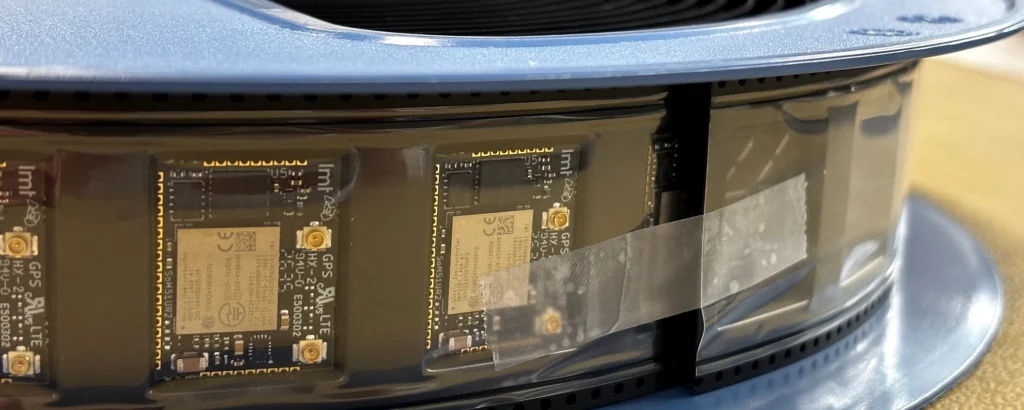
The module ships on tape-and-reel or in trays for high-volume SMT assembly, or boxed for hand assembly. The SDK and cloud support large-scale deployment, device onboarding and device type configuration, with connectivity billing included.

How it works

From device to cloud

01
Integrate the module into your device’s carrier board and connect sensors through I²C, SPI, UART or I²S interfaces. Provide a suitable power supply and antennas for the selected hardware configuration.
02
Develop your application on the module with the Zephyr-based SDK, or keep the preloaded gateway firmware and drive the module from your existing MCU.
03
The IoT module sends data through available NB-IoT or LTE-M networks. Its UDP, CoAP and DTLS communication stack connects the device to LMT cloud services.
04
LMT cloud services process and store device data in EU data centres and provide device-management functions.
05
View measurements in the LMT IoT device management platform, integrate cloud data into your own systems through REST APIs and webhooks or present the data through a white-label app.

Cellular module specifications

Parameter IoT Shortcut module
Part numbers SOM51U10 (U.FL antennas), SOM51C10 (chip antenna)
Cellular component Nordic Semiconductor nRF9151 SiP
Network technologies LTE-M (Cat-M1); NB-IoT (Cat-NB1/NB2)
Satellite connectivity NTN backup when cellular connectivity is lost
Positioning GPS (GNSS), passive antenna only
RF output power Up to +23 dBm (Power Class 3), +20 dBm (Power Class 5)
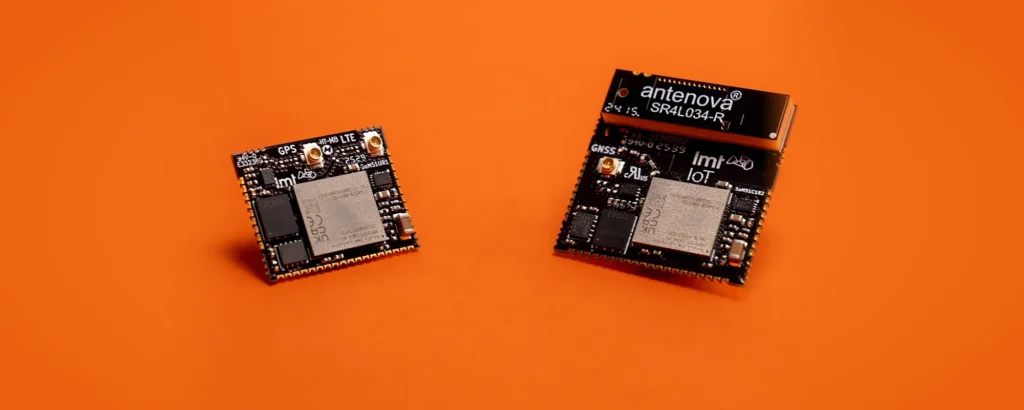
Dimensions and weight 20 × 25 mm (U.FL version), 30 × 31 mm (chip-antenna version); approx. 4 g
Operating voltage 3.2–3.6 V (Absolute maximum range 0.0–3.9 V)
Peak / average TX current Up to 500 mA / approx. 40 mA
Deep-sleep current Less than 8 µA at a 3.6 V supply
Energy per upload 90 mJ / 25 µWh (100 B payload, excellent signal)
Processor 64 MHz Arm Cortex-M33, 1 MB flash, 256 KB RAM
External memory 4 MB flash
Digital interfaces I²C, SPI, UART, I²S
Analog / PWM 7 × 12-bit ADC (200 ksps), 4 × PWM
SIM Embedded MFF2 SIM plus external SIM via SIM switch
Firmware development Zephyr-based SDK
Cloud protocol UDP + CoAP + DTLS
Assembly Castellated pins, SMT reflow or hand soldering
Packaging Tape-and-reel (350 pcs), tray (50 pcs), box (10 pcs)

An IoT system on module combines processing and connectivity on one board. The table describes the IoT  module. Connectivity plans, cloud services and app customization are scoped in the project proposal

Connect your devices with LMT

Discuss your specific device and connectivity needs. Get help choosing the right setup and planning the integration, from prototype to deployment.

Country

FAQ

Show more
Read more Read less

NB-IoT or LTE-M?

An NB-IoT module suits stationary sensors that send small updates, such as remote meters. An LTE-M module suits moving assets and applications with more frequent communication. IoT Shortcut supports both technologies; network availability and power use depend on the deployment.

IoT connectivity modules need a suitable data service as well as hardware. IoT Shortcut includes an MFF2 SIM and supports an external SIM through its built-in SIM switch. LMT offers hardware-and-data packages and subscription options, with the service scope matched to your project.

Hardware integration

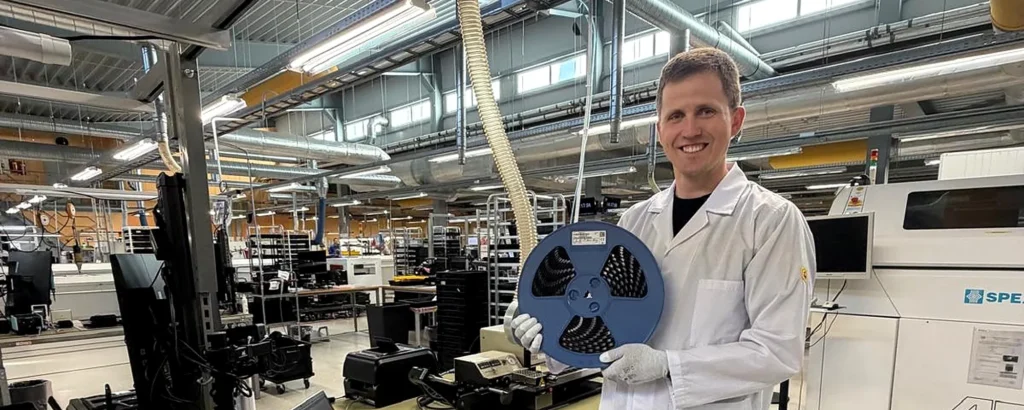
LMT develops the IoT Shortcut SoM, manufactured in Latvia, using Nordic Semiconductor’s nRF9151. When comparing cellular module manufacturers, consider both the core component and the board’s interfaces, firmware and integration support.

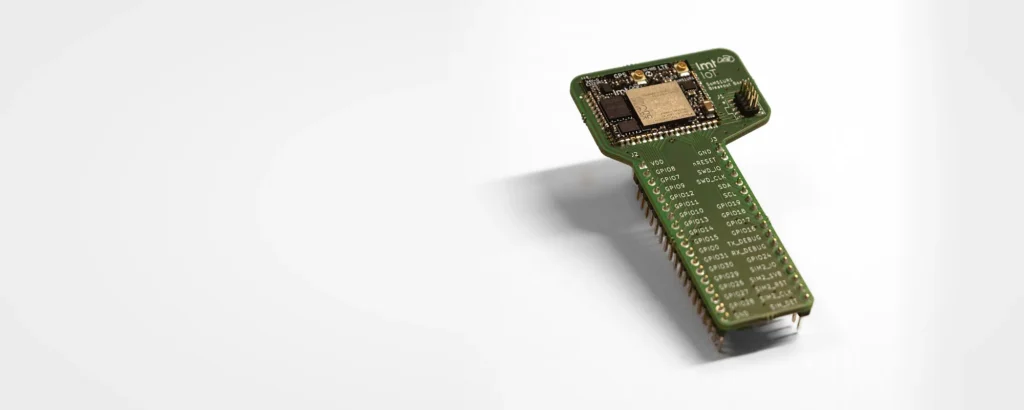
The IoT cellular module has castellated pins, solderable contacts along the board edges, for hand soldering or SMT reflow assembly. Tape-and-reel packaging supports production. External GPS and cellular antenna connections are provided. Alternative antenna and board configurations are available on request.

Cloud and apps

The IoT Shortcut cloud platform provides dashboards, data export, event alerts and role-based access. Integrate these functions into your application or use a white-label interface.